Yehia Elrakaiby presented his joint work with Alessio Ferrari at the 25th IEEE International Requirements Engineering Conference. The topic was about the use of argumentation to explain ambiguities in oral interviews. The goal of the presentation was to show that argumentation theory can be used to detect and formally explain unclear requirements or misunderstandings between a requirements analyst and a customer. This is a data-grounded contribution that provides a theoretical basis to have a more complete understanding of the ambiguity phenomenon, and lays the foundations to design intelligent computer-based agents that are able to automatically identify ambiguities.
Similar Posts
Lifetime Service Award for Bashar
Congratulations to Bashar Nuseibeh on receiving the 2021 IEEE RE Lifetime Service Award for outstanding leadership & services to the requirements engineering community over the last three decades.
Sorren Presents at SERF 2017
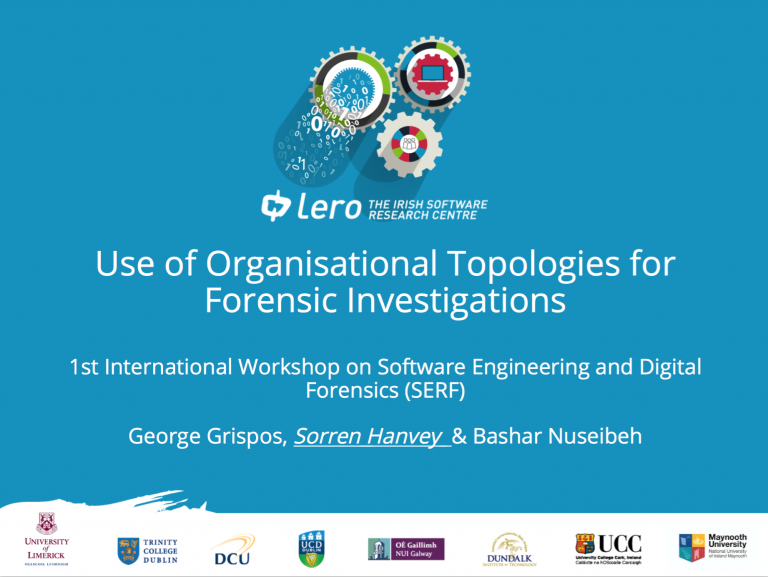
Sorren presented a paper on the ‘Use of Organisational Topologies for Forensic Investigations’ at the 1st International Workshop on Software Engineering and Digital Forensics (SERF) co-located with ESEC/FSE 2017. The…
Bashar gives Keynote Address at ESEC/FSE in Italy
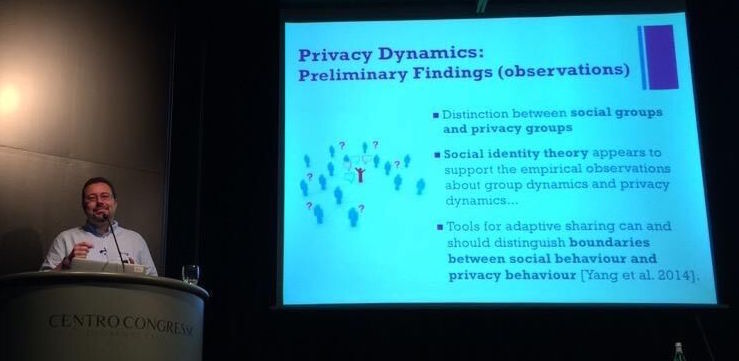
The keynote was titled, “Software without Boundaries: engineering secure invisible software”.
- EPE - Events - Presentations
Doctor! Doctor! My Smartphone Says I’m Sick!
George Presents ‘Doctor! Doctor! My Smartphone Says I’m Sick!’ at Pint of Science 2017. His presentation revealed that we have way to much information on our phones.
- EPE - Forensics - Interviews - Papers
WannaCry Highlights the Need for Engineering Forensic Ready Systems!
Are current systems ready to identify the cause of cyber attacks and apprehend the perpetrators? In his study, ‘Are You Ready? Towards the Engineering of Forensic-Ready Systems‘, George found that…
“Article of the Week”
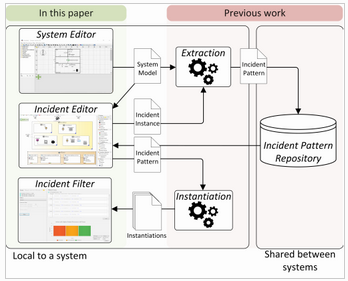
The article “On the Automated Management of Security Incidents in Smart Spaces” was featured as the IEEE Access “Article of the Week”. In this article, the authors (Faeq Alrimawi, Liliana…