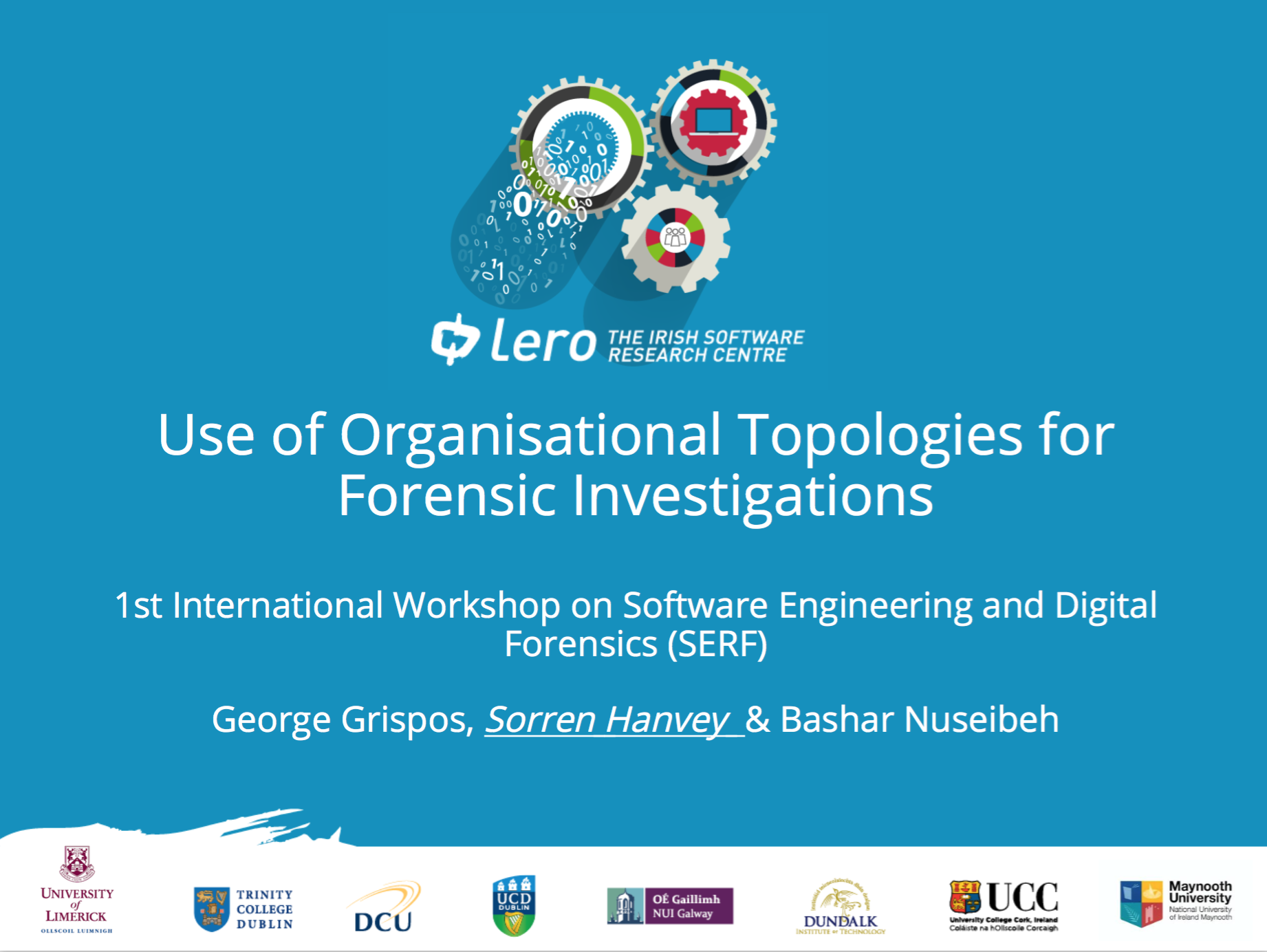
Sorren presented a paper on the ‘Use of Organisational Topologies for Forensic Investigations’ at the 1st International Workshop on Software Engineering and Digital Forensics (SERF) co-located with ESEC/FSE 2017. The paper puts forth theidea of using the topology of an organisation’s structure to define the roles and responsibilities to assist with handling a forensic investigation. The paper was commended for highlighting the valuable insights that can be gained from analysing organisational workflows.
Similar Posts
- EPE - Forensics - Interviews - Papers
WannaCry Highlights the Need for Engineering Forensic Ready Systems!
Are current systems ready to identify the cause of cyber attacks and apprehend the perpetrators? In his study, ‘Are You Ready? Towards the Engineering of Forensic-Ready Systems‘, George found that…
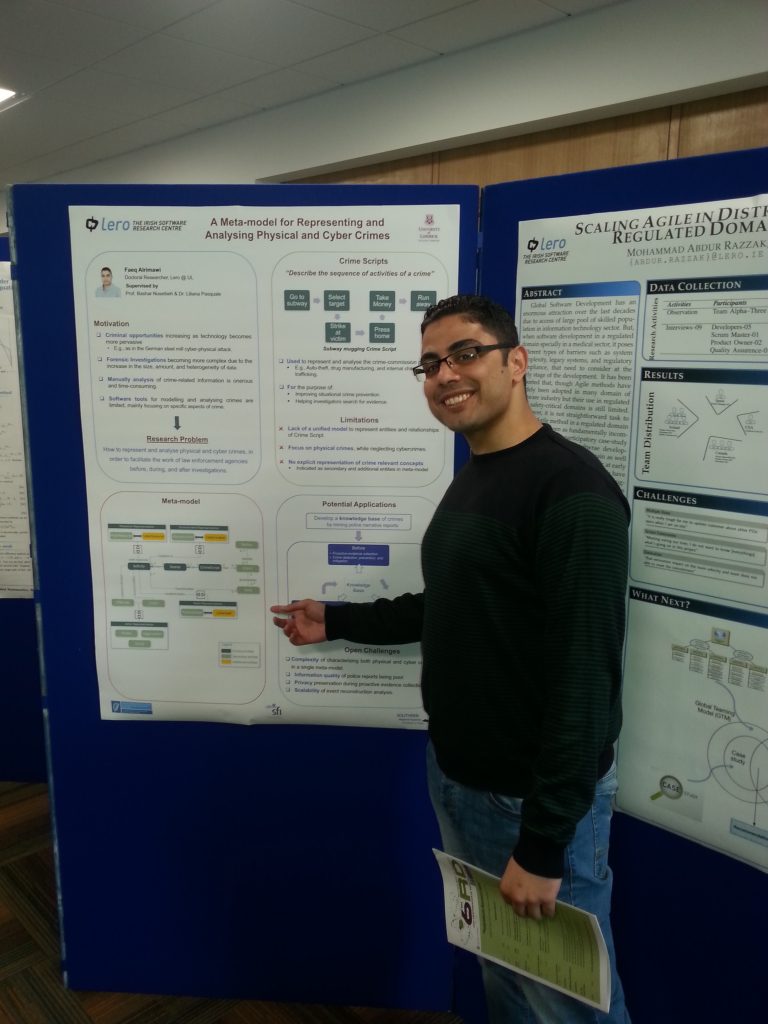
Faeq presents his poster at Research Day in NUI Galway
Faeq attended the “6th annual NUI Galway – University of Limerick Alliance Research Day” which took place on April 29th 2016 in the Analog building in UL. He submitted an…
- Awards - Conferences - Papers
ASAP Group Awarded Best Paper at SEAMS 2018
Thein Than Tun and Bashar Nuseibeh were on stage to accepted the Best Paper Award at SEAMS 2018. The paper is titled, Requirements and Specifications for Adaptive Security: Concepts and…
George is now on the Editorial board of Digital Investigation
Digital Investigation is The International Journal of Digital Forensics and Incident Response which supports open access.
Congratulations Dr Mazen!
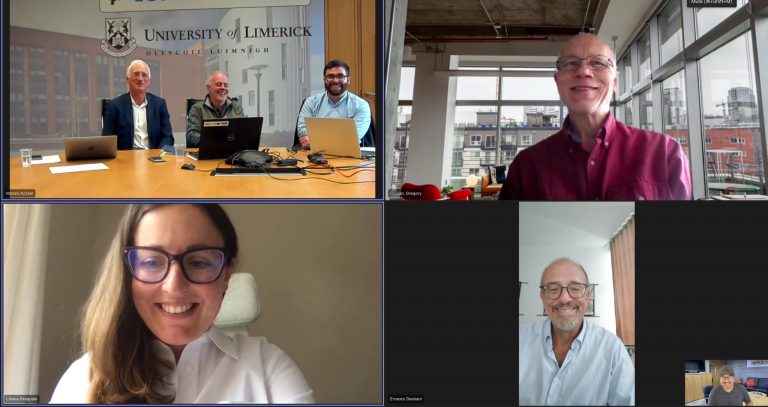
Mazen Azzam successfully defended his PhD thesis entitled ‘Physics-based Early Warnings for Forensic Readiness in Industrial Control Systems‘ on 30th May 2022. His external examiner was Prof. Ernesto Damiani, the…
Congratulations Dr Fanny!
Fanny Rivera Ortiz successfully defended her Ph.D. thesis titled “Engineering Forensic-Ready Software Systems using Automated Logging” on Friday, July 7th, 2023 at 2:30 pm Irish Time. The defense panel included…